
Have you ever had a dispute with a teacher or boss about the wording of a question or instruction?
In the Spirit
It is common - almost instinctive - to experience God as another force trying to control things. Another authority. Another system of pressure. However, God’s desire has never been control. God desires freedom, but not indulgent, self-justifying freedom. This is not freedom from responsibility, but freedom for love. It is freedom within grace, freedom that does not require self-justification. God is not trying to manage outcomes. God is forming people - and that changes everything.
Now that you've answered the Icebreaker, here's another question - this one, about what makes someone significant.
What makes someone significant?
Most of us treat significance like a receipt. If you can point to what someone has done - what they’ve built, achieved, fixed, or influenced - then we say, that mattered. Significance becomes evidence-based. Outcomes prove worth.
But that’s not actually what the word means.
Significant comes from the Latin significare: to mark, to indicate, to point to something. A sign doesn’t have to accomplish anything on its own. A stop sign doesn’t stop cars because it’s powerful; it stops them because someone with authority said, this marks something that matters.
We’ve quietly shifted the meaning. We talk as if significance is earned through productivity or impact, when originally it was something declared. Something becomes significant because it has been named as such.
That opens up a different way of seeing people...and ourselves.
In the Christian story, God doesn’t wait for results before speaking significance. Jesus is called “beloved” before he heals anyone, teaches anyone, or goes anywhere. No accomplishments yet. Just a declaration.
Which means significance doesn’t have to be the reward for a life well-lived. It can be the starting point. God can mark something (someone) as significant even if they never accomplish what the world would call success.
And that changes the question from “What have I done?” to “What has God named?”
What makes someone significant?
Most of us treat significance like a receipt. If you can point to what someone has done - what they’ve built, achieved, fixed, or influenced - then we say, that mattered. Significance becomes evidence-based. Outcomes prove worth.
But that’s not actually what the word means.
Significant comes from the Latin significare: to mark, to indicate, to point to something. A sign doesn’t have to accomplish anything on its own. A stop sign doesn’t stop cars because it’s powerful; it stops them because someone with authority said, this marks something that matters.
We’ve quietly shifted the meaning. We talk as if significance is earned through productivity or impact, when originally it was something declared. Something becomes significant because it has been named as such.
That opens up a different way of seeing people...and ourselves.
In the Christian story, God doesn’t wait for results before speaking significance. Jesus is called “beloved” before he heals anyone, teaches anyone, or goes anywhere. No accomplishments yet. Just a declaration.
Which means significance doesn’t have to be the reward for a life well-lived. It can be the starting point. God can mark something (someone) as significant even if they never accomplish what the world would call success.
And that changes the question from “What have I done?” to “What has God named?”
Hopefully that makes enough sense to get you started. As you continue into the Worship portion of the Spotlight, pray this prayer together:
Lord,
When we leave behind the measurements
and calculations of a merit based system,
we can find ourselves wondering how things are supposed to work.
Show us what living free looks like
in the spirit - and in the Spirit.
Amen.
Lord,
When we leave behind the measurements
and calculations of a merit based system,
we can find ourselves wondering how things are supposed to work.
Show us what living free looks like
in the spirit - and in the Spirit.
Amen.
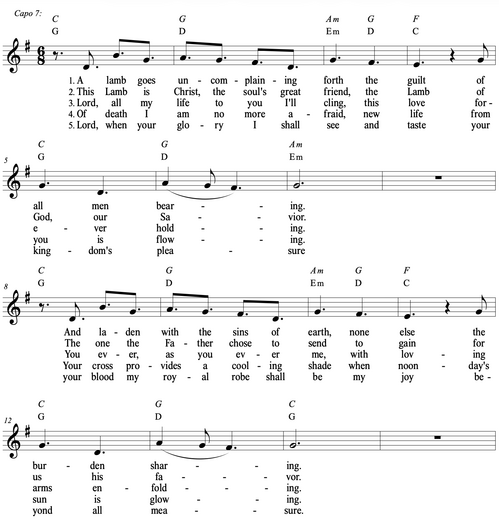
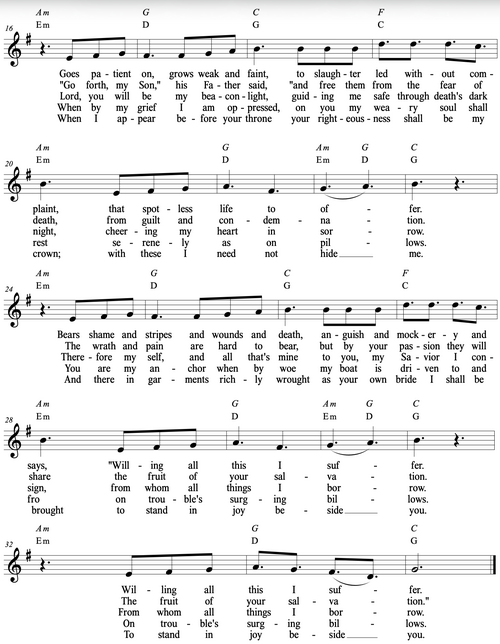
Begin the worship section of this Spotlight by listening to the hymn "A Lamb Goes Uncomplaining Forth." This hymn talks about Jesus as a lamb who goes, willingly, to slaughter, at the urging of his father. It's an odd picture, but the last three verses of the hymn celebrate the glorious result.
This sets us up to think of what Jesus "chooses" to do - how much control he does or doesn't exert over his own life, death, and the results of it all.
This sets us up to think of what Jesus "chooses" to do - how much control he does or doesn't exert over his own life, death, and the results of it all.
The video below will read you John 6:1-60. It's a big section with some big things happening - the feeding of 5,000+ people, Jesus walking on water, and then this whole conversation about bread and Jesus being the bread of life.
At the center of it is an important statement of Jesus about what controls him. He says he does only what his Father sends him. That means he becomes this bread for the people. It means he gives life. It means he has purpose. This is Jesus' version of being "in the Spirit."
Watch the video, then reflect using the responsive reading below it.
At the center of it is an important statement of Jesus about what controls him. He says he does only what his Father sends him. That means he becomes this bread for the people. It means he gives life. It means he has purpose. This is Jesus' version of being "in the Spirit."
Watch the video, then reflect using the responsive reading below it.
A Responsive Reflection on Freedom, Being Sent, and Life in the Spirit
Leader:
Hear these words from Jesus:
Group:
Leader:
Jesus describes his life not in terms of control, but of purpose.
He is not reacting to circumstances.
He is not driven by fear of failure or loss.
He knows why he is here.
This is important, because John 6 is a chapter full of pressure.
The crowd wants more bread.
They want certainty.
They want guarantees.
Some want to make Jesus king.
Group:
And Jesus does not take control.
Leader:
Instead, Jesus keeps returning to the same truth:
He is sent.
He receives his life, his work, and his future from the Father.
That clarity gives him freedom; not freedom to do anything he wants,
but freedom to do what he was given to do.
Group:
Jesus’ freedom comes from trust, not power.
Leader:
Throughout John 6, Jesus refuses coercion.
He does not force belief.
He does not adjust his message to keep followers.
When people leave, he lets them go.
This tells us something important:
God’s work is not sustained by control.
It is sustained by faithfulness.
Group:
God does not manage outcomes.
God forms people.
Leader:
Now listen carefully to what this means for us.
Many of us experience God as another controlling force,
another voice demanding results, obedience, or certainty.
But Jesus reveals something different.
Jesus’ obedience is not anxious.
It is not performative.
It is not driven by fear.
It is relational.
Group:
This is the freedom of the Son.
Leader:
The New Testament describes this same way of living as life in the Spirit.
Paul does not say, “Be controlled by the Spirit.”
He says, “Walk by the Spirit.”
“Be led by the Spirit.”
“Where the Spirit of the Lord is, there is freedom.”
Life in the Spirit is not about managing everything correctly.
It is about trusting that you are sent, held, and guided.
Group:
The Spirit leads; we do not have to force.
Leader:
So let us turn inward for a moment.
Where do you feel pressure to control outcomes?
Where do you feel responsible for things that may not actually be yours to carry?
Where have you confused faithfulness with control?
Pause for reflection.
Leader:
Jesus’ freedom came from doing only what he was sent to do.
Not everything that could be done.
Not everything others demanded.
Only what the Father gave him.
Life in the Spirit invites us into that same clarity.
Group:
We do not need to control what is not ours.
Leader:
Being in the Spirit does not mean passivity.
It means trust without grasping.
Action without anxiety.
Faithfulness without self-justification.
This is the freedom Jesus lives and the freedom he shares.
Group:
Teach us to live as those who are sent.
Leader:
Holy Spirit,
free us from the need to manage outcomes.
Form us into people who trust your leading.
Teach us the freedom of Christ.
Group:
Amen.
Leader:
Hear these words from Jesus:
Group:
“For I have come down from heaven, not to do my own will,
but the will of him who sent me.” (John 6:38)
Leader:
Jesus describes his life not in terms of control, but of purpose.
He is not reacting to circumstances.
He is not driven by fear of failure or loss.
He knows why he is here.
This is important, because John 6 is a chapter full of pressure.
The crowd wants more bread.
They want certainty.
They want guarantees.
Some want to make Jesus king.
Group:
And Jesus does not take control.
Leader:
Instead, Jesus keeps returning to the same truth:
He is sent.
He receives his life, his work, and his future from the Father.
That clarity gives him freedom; not freedom to do anything he wants,
but freedom to do what he was given to do.
Group:
Jesus’ freedom comes from trust, not power.
Leader:
Throughout John 6, Jesus refuses coercion.
He does not force belief.
He does not adjust his message to keep followers.
When people leave, he lets them go.
This tells us something important:
God’s work is not sustained by control.
It is sustained by faithfulness.
Group:
God does not manage outcomes.
God forms people.
Leader:
Now listen carefully to what this means for us.
Many of us experience God as another controlling force,
another voice demanding results, obedience, or certainty.
But Jesus reveals something different.
Jesus’ obedience is not anxious.
It is not performative.
It is not driven by fear.
It is relational.
Group:
This is the freedom of the Son.
Leader:
The New Testament describes this same way of living as life in the Spirit.
Paul does not say, “Be controlled by the Spirit.”
He says, “Walk by the Spirit.”
“Be led by the Spirit.”
“Where the Spirit of the Lord is, there is freedom.”
Life in the Spirit is not about managing everything correctly.
It is about trusting that you are sent, held, and guided.
Group:
The Spirit leads; we do not have to force.
Leader:
So let us turn inward for a moment.
Where do you feel pressure to control outcomes?
Where do you feel responsible for things that may not actually be yours to carry?
Where have you confused faithfulness with control?
Pause for reflection.
Leader:
Jesus’ freedom came from doing only what he was sent to do.
Not everything that could be done.
Not everything others demanded.
Only what the Father gave him.
Life in the Spirit invites us into that same clarity.
Group:
We do not need to control what is not ours.
Leader:
Being in the Spirit does not mean passivity.
It means trust without grasping.
Action without anxiety.
Faithfulness without self-justification.
This is the freedom Jesus lives and the freedom he shares.
Group:
Teach us to live as those who are sent.
Leader:
Holy Spirit,
free us from the need to manage outcomes.
Form us into people who trust your leading.
Teach us the freedom of Christ.
Group:
Amen.
Let's get into this "in the Spirit" idea.

Let's talk about protesting.
First of all, we discuss this unconditionally. Protest is a voluntary action that is not for everyone. We discuss it here because it is happening - and if we can't talk about things that are happening around us at church...what's the point of being the church?
Please close this discussion by praying for protestors, their causes, and those who are being protested against.
- What is the difference between protesting out of reaction and protesting as an act of being sent?
- How can you tell, in your own body and motivations, when an action is flowing from anger, fear, or ego (control) versus from a sense of call, trust, and alignment with God’s work?
- In John 6, Jesus frames his freedom as faithfulness to the One who sent him. When you think about causes you care about, what would it feel like to ask first: “Is this mine to carry?” rather than “Do I agree with this?”
- Jesus resists being pulled into every demand placed on him in John 6. How might being “in the Spirit” sometimes mean protesting loudly, and other times mean refusing to join a protest at all? What practices help you discern the difference?
Please close this discussion by praying for protestors, their causes, and those who are being protested against.
Pray Together
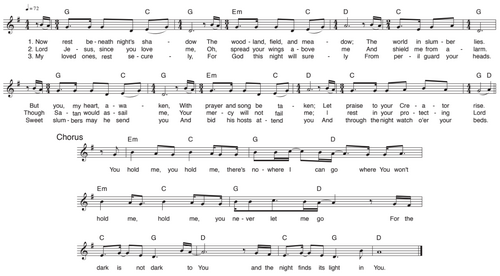
Close this Spotlight with the song "Now Rest Beneath Night's Shadow."
Posted in Control is Passing
No Comments