
Have you ever taken a bite or sip of something that ended up tasting nothing like you expected?
Feeling Thrown
Feelings land on us. They are the subjective side of life: what we’ve been thrown beneath, often without warning. God’s promises, on the other hand, are the objective side: what he has thrown in front of us, something solid to move toward. Both are good, and neither was meant to cancel the other. Let’s talk about what it means if we say that we were made for motion (not stuck-ness) and how we can keep moving with God when we feel thrown.
Now that you've answered the Icebreaker, here's another question - this one, about throwing.
Hopefully that makes enough sense to get you started. As you continue into the Worship portion of the Spotlight, pray this prayer together:
Lord,
Remind us we are meant to be in motion,
moving with you and the world around us.
As we take things in
and as we let things out
move with us and respond to us with your unending love.
Amen.
Lord,
Remind us we are meant to be in motion,
moving with you and the world around us.
As we take things in
and as we let things out
move with us and respond to us with your unending love.
Amen.
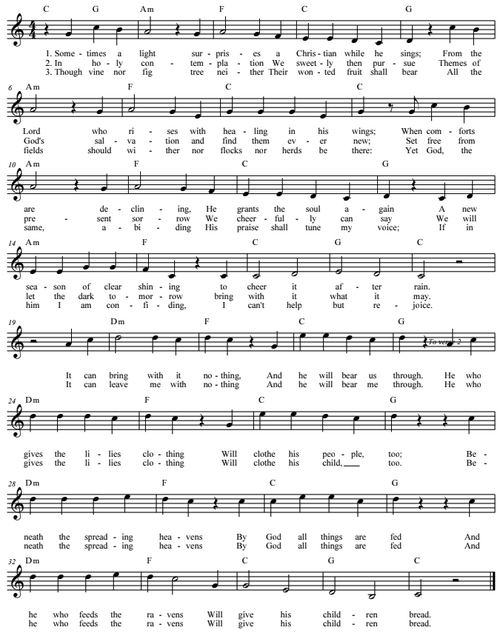
Respond to this by listening to or singing along with William Cowper's poem, "Sometimes a Light Surprises" in the form of the sung setting of the poem, set by artist Josh White, known as He Who Feeds the Ravens.
Thrown Under, Thrown in Front, and Thrown Toward
You will need a writing utensil and a scrap of paper or index card per person.
Here is a little poem, often attributed to Martin Luther (but probably not really by him...)
Feelings come and feelings go,
And feelings are deceiving;
My warrant is the Word of God –
Naught else is worth believing.
Though all my heart should feel condemned
For want of some sweet token,
There is One greater than my heart
Whose Word cannot be broken.
I’ll trust in God’s unchanging Word
‘Til soul and body sever,
For, though all things shall pass away,
His Word shall stand forever!
--
What do you think of it? Agree? Disagree? Things you might say differently?
It's probably not really from Luther, and if it is, it's an incomplete representation of his understanding and relationship with emotion, the subjective, and the objective. Here's something he definitely did write, in his "Prefaces to the Books of the Bible."
"For the heart of man is like a ship upon a troubled ocean, driven about by winds from every corner of the earth. Care and fear, under the apprehension of impending evils, impel it one way; grief and fear, under the influence of present distress, impel it another; hope and presumption, and the prospect of future prosperity, another; the actual possession of prosperity and the breezes of security and of pleasure, another.
But these tempests of the heart induce us to hold the language of earnestness, and to examine the bearings and the recesses of the soul. For he who is weighed down by fear and poverty speaks of misfortunes in a very different way from him who basks in the sunshine of prosperity; and he who is elated by prosperity speaks and sings of joys in a totally different strain from him who lives under the trammels of fear. It has been well said that it comes not from the heart when a wretched man is to laugh, and a happy man is to weep; the avenues to his heart are closed, and the whole effect is disappointment.
But what is the chief subject of the Psalms, if it is not earnestness of language in all the storms and contradictions of life? Where shall we find words more adapted to express joy, than what are contained in the Psalms of thanksgiving and of praise? We see here the hearts of saints."
We've seen that subject means "thrown under" and object means "thrown in front." In this quote, Martin Luther is using the idea of a storm to describe the subjective, and the earnest words that declare God's promises and faith in those promises as the objective. No matter what, though, you're at sea.
We were made for motion, so the question isn't how to stop feeling thrown but how to take advantage of moving when we feel thrown. How can we lean in a little?
Step 1: Sort
Read each statement aloud. As a group, decide whether it is subjective (S) or objective (O). Use one test: would it still be true if my feelings changed? If yes, it's objective. If no, it's subjective.
Step 2: Write One Sentence
Each person writes one sentence in this form:
I feel ______, and ______ is true.
For the first blank, name something real from this week and the honest feeling that came with it. For the second blank, choose one promise from the list below. Use the word and, not but. "But" makes one side beat the other. "And" lets both stand.
Example: "I feel anxious about my mom's test results, and God cares for me."
Share in pairs. Read your sentence aloud. Your partner repeats it back exactly: "So you feel ______, and ______ is true." Then switch. Partners don't fix, advise, or add anything.
Debrief
Here is a little poem, often attributed to Martin Luther (but probably not really by him...)
Feelings come and feelings go,
And feelings are deceiving;
My warrant is the Word of God –
Naught else is worth believing.
Though all my heart should feel condemned
For want of some sweet token,
There is One greater than my heart
Whose Word cannot be broken.
I’ll trust in God’s unchanging Word
‘Til soul and body sever,
For, though all things shall pass away,
His Word shall stand forever!
--
What do you think of it? Agree? Disagree? Things you might say differently?
It's probably not really from Luther, and if it is, it's an incomplete representation of his understanding and relationship with emotion, the subjective, and the objective. Here's something he definitely did write, in his "Prefaces to the Books of the Bible."
"For the heart of man is like a ship upon a troubled ocean, driven about by winds from every corner of the earth. Care and fear, under the apprehension of impending evils, impel it one way; grief and fear, under the influence of present distress, impel it another; hope and presumption, and the prospect of future prosperity, another; the actual possession of prosperity and the breezes of security and of pleasure, another.
But these tempests of the heart induce us to hold the language of earnestness, and to examine the bearings and the recesses of the soul. For he who is weighed down by fear and poverty speaks of misfortunes in a very different way from him who basks in the sunshine of prosperity; and he who is elated by prosperity speaks and sings of joys in a totally different strain from him who lives under the trammels of fear. It has been well said that it comes not from the heart when a wretched man is to laugh, and a happy man is to weep; the avenues to his heart are closed, and the whole effect is disappointment.
But what is the chief subject of the Psalms, if it is not earnestness of language in all the storms and contradictions of life? Where shall we find words more adapted to express joy, than what are contained in the Psalms of thanksgiving and of praise? We see here the hearts of saints."
We've seen that subject means "thrown under" and object means "thrown in front." In this quote, Martin Luther is using the idea of a storm to describe the subjective, and the earnest words that declare God's promises and faith in those promises as the objective. No matter what, though, you're at sea.
We were made for motion, so the question isn't how to stop feeling thrown but how to take advantage of moving when we feel thrown. How can we lean in a little?
Step 1: Sort
Read each statement aloud. As a group, decide whether it is subjective (S) or objective (O). Use one test: would it still be true if my feelings changed? If yes, it's objective. If no, it's subjective.
- "I'm overwhelmed."
- "The Lord is near to the brokenhearted."
- "Nobody cares what happens to me."
- "Nothing can separate us from God's love."
- "I'm exhausted."
- "God cares for you."
- "I feel peace right now."
- "His mercies are new every morning."
Step 2: Write One Sentence
Each person writes one sentence in this form:
I feel ______, and ______ is true.
For the first blank, name something real from this week and the honest feeling that came with it. For the second blank, choose one promise from the list below. Use the word and, not but. "But" makes one side beat the other. "And" lets both stand.
Example: "I feel anxious about my mom's test results, and God cares for me."
Share in pairs. Read your sentence aloud. Your partner repeats it back exactly: "So you feel ______, and ______ is true." Then switch. Partners don't fix, advise, or add anything.
Debrief
- Which blank was easier to write, the feeling or the promise? What might that tell us?
- Did "and" instead of "but" change how your sentence felt?
- What happens if we only keep our feelings and drop the promises? What happens if we only keep the promises and drop our feelings?
- Read Psalm 42:5 together. How is the writer doing the same thing we just did?
Watch this video in which author Heidi Goehmann pitches her book.
Christianity has something to add to the broader conversation about emotions. You may remember this from the first Spotlight of this series:
Christianity has something to add to the broader conversation about emotions. You may remember this from the first Spotlight of this series:
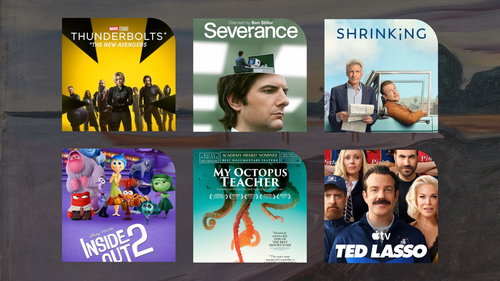
Can you articulate, as if to a friend or neighbor, what emotions as a gift of grace adds to the content of any one of these stories?
Pray Together
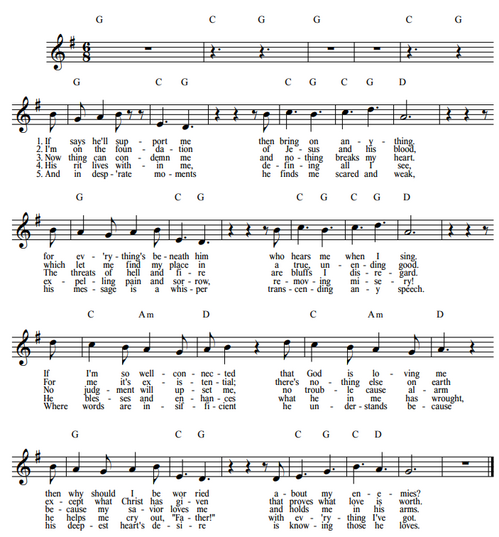
Close with this song.
Posted in On Letting Off Steam
No Comments