
Have you ever used a tool in a way it was not meant to be used? Was it intentional, or out of ignorance?
Feeling Intentional
Emotionality, as a tool, is meant to be used - but like any tool, if we do not know what the tool is designed to do, we won't know how to use it well. Let's talk about the ways that God was intentional as he chose to include emotion in the human experience as well as how we can follow that intention into making good use of what we feel.
Now that you've answered the Icebreaker, here's another question - this one, about check engine lights.
What would you do if the check engine light came on in your vehicle?
Hopefully, at least in general, you'd do something. The check engine light is, after all, there for a reason. It's meant to tell you that something is off, drawing attention to happening on the inside of your vehicle that may otherwise go unnoticed.
In 2016, John Thomas bought a used BMW from a car dealership in Lynnwood, WA. He test drove the car, finding everything to seem alright, purchased it, and drove it off the lot. Three days later, he was stuck in the middle of the road with his daughter - the car having quit and refusing to restart.
He first called the dealership, asking for their help with this clearly problematic car - but they refused and insisted that the problem was his and all sales were final. After having the vehicle towed to a mechanic's shop, investigation uncovered that the dealership from which Mr. Thomas had purchased the vehicle had gone in, under the dash, and put duct tape over the light bulb that would have shone through the words "Check Engine" - making it so that, even though there was a clear and present problem, the vehicle would show no signs.
Sometimes people treat their emotions like the dealership treated this check engine light. Something feels off, and rather than ask what it’s telling us, we cover it up. We put tape over the anger. We tape over the sadness, or the fear, or the longing. We call it maturity, or professionalism, or being fine.
But we all know what the tape actually did. The problem didn’t go away. The engine was still failing. All the tape changed was whether anyone could know what was happening - especially the person who needed to know it most.
That’s the thing about a warning light. It isn’t the problem. It’s the part of the system that’s working, telling you the truth about what’s happening underneath. Cover it up, and you haven’t solved anything. You’ve only lost your chance to respond in time.
So today’s question isn’t “how do we get rid of the light?” It’s “what was it designed to tell us, and what are we meant to do once we’ve heard it?”
Hopefully that makes enough sense to get you started. As you continue into the Worship portion of the Spotlight, pray this prayer together:
Lord,
We agree with the Psalm-writer who said that we are
"fearfully and wonderfully made."
May we see more clearly the ways you've designed us
and make the most of your intentions.
Amen.
Lord,
We agree with the Psalm-writer who said that we are
"fearfully and wonderfully made."
May we see more clearly the ways you've designed us
and make the most of your intentions.
Amen.
Find comfort in the reality that God made emotionality and our hearts using the responsive reading below. Using a wide range of selections from the Bible, you'll be encouraged by a God who made our hearts with purpose, who feels with us, and joins in our emotion in Jesus.
We've referred to emotionality as a tool in this Spotlight, which is a common way for therapists and counselors to refer to them as well. However, it still maters a great deal that we know what kind of tool emotions are - and what the tool is for.
Earlier, the example of a check engine light was given. In what ways can emotions be like a check engine light?
One of the problems with the check engine analogy, though, is that it only functions when something is wrong. Emotions are more neutral than that - they indicate that which is bad along with that which is good.
Read this story from Nehemiah 8. As you read, notice the emotions/emotional responses that are mentioned. For context, this story is about people who had returned from exile and were trying to resettle the promised land.
Nehemiah 8:2-12
2 So on the first day of the seventh month Ezra the priest brought the Law before the assembly, which was made up of men and women and all who were able to understand. 3 He read it aloud from daybreak till noon as he faced the square before the Water Gate in the presence of the men, women and others who could understand. And all the people listened attentively to the Book of the Law.
4 Ezra the teacher of the Law stood on a high wooden platform built for the occasion. Beside him on his right stood Mattithiah, Shema, Anaiah, Uriah, Hilkiah and Maaseiah; and on his left were Pedaiah, Mishael, Malkijah, Hashum, Hashbaddanah, Zechariah and Meshullam.
5 Ezra opened the book. All the people could see him because he was standing above them; and as he opened it, the people all stood up. 6 Ezra praised the Lord, the great God; and all the people lifted their hands and responded, “Amen! Amen!” Then they bowed down and worshiped the Lord with their faces to the ground.
7 The Levites—Jeshua, Bani, Sherebiah, Jamin, Akkub, Shabbethai, Hodiah, Maaseiah, Kelita, Azariah, Jozabad, Hanan and Pelaiah—instructed the people in the Law while the people were standing there. 8 They read from the Book of the Law of God, making it clear[a] and giving the meaning so that the people understood what was being read.
9 Then Nehemiah the governor, Ezra the priest and teacher of the Law, and the Levites who were instructing the people said to them all, “This day is holy to the Lord your God. Do not mourn or weep.” For all the people had been weeping as they listened to the words of the Law.
10 Nehemiah said, “Go and enjoy choice food and sweet drinks, and send some to those who have nothing prepared. This day is holy to our Lord. Do not grieve, for the joy of the Lord is your strength.”
11 The Levites calmed all the people, saying, “Be still, for this is a holy day. Do not grieve.”
12 Then all the people went away to eat and drink, to send portions of food and to celebrate with great joy, because they now understood the words that had been made known to them.
Discuss:
- The people wept as the Law was read. What do you think that weeping was detecting?
- Their leaders said “do not weep.” Do you think this was different from putting tape over the light? What did they do instead?
- By the time we get to verse 12, the same people who wept are celebrating. What was the joy pointing to? (Hint: look at the last clause.
Exploring Regulation & Modulation
Listen to this clip in which author Heidi Goehmann is interviewed about emotional regulation, modulation, and control.
At about 3:15, the author gives an explanation of the difference between relating to emotion using the "law" and relating to emotion using "grace" or "the gospel." If you need to re-listen to that, please do. Then, as a group, come up with 3 examples of each - ways people might relate (unfortunately) from a "law" perspective, and ways people might relate with their emotions from a "gospel" perspective.
At about 3:15, the author gives an explanation of the difference between relating to emotion using the "law" and relating to emotion using "grace" or "the gospel." If you need to re-listen to that, please do. Then, as a group, come up with 3 examples of each - ways people might relate (unfortunately) from a "law" perspective, and ways people might relate with their emotions from a "gospel" perspective.
Pray Together
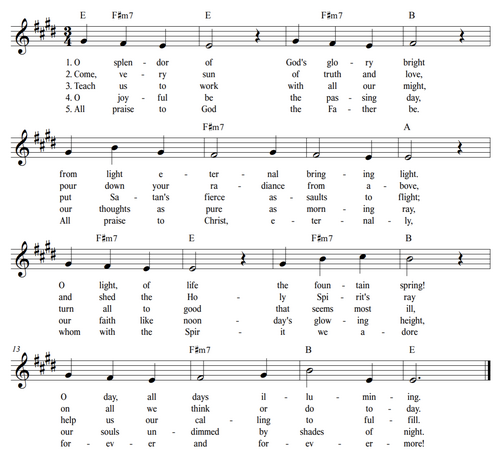
Close with this song.
Posted in On Letting Off Steam
No Comments