
What's the most recent item you returned to the place of purchase?

Feeling Grateful
Emotions help us connect - leading us into both sharing ourselves and receiving others. These actions (sharing and receiving) lead to unity, and that's a good thing - the body of Christ, of which we are all parts, needs it! Gratitude toward emotion, then, happens with seeing it as something to be received (grace), not something to be managed well enough (Law).
Now that you've answered the Icebreaker, here's another question - this one, about making returns.
If you could send one emotion back, which would it be?
Certainly, there are times when you might wish you could "take back" the way you responded to something you saw or something that happened. For example, you make a face or say a word that you wish you could undo - but you just can't. This question, though, is not meant to be about individual reactions. It's about getting rid of your ability to experience an entire emotion.
If you could make it so you never had to feel a particular emotion again - which would be gone? Which would you prefer didn't exist?
Maybe you'd choose to never get angry at anything ever again.
Maybe you'd eliminate fear so it couldn't control your choices anymore.
Maybe you'd do away with grief so you could let go more easily.
Obviously, this isn't really possible, if it were it would be tempting. Anybody who found themselves with this power would likely pick an emotion that they'd felt before, didn't enjoy, and thought would be better eliminated. The corollary: nobody who had this option would choose to eliminate an emotion they didn't care about or hadn't felt.
But now, imagine that you succeed in getting rid of your ability to experience an emotion. What would be gone?
If you could make it so you never had to feel a particular emotion again - which would be gone? Which would you prefer didn't exist?
Maybe you'd choose to never get angry at anything ever again.
Maybe you'd eliminate fear so it couldn't control your choices anymore.
Maybe you'd do away with grief so you could let go more easily.
Obviously, this isn't really possible, if it were it would be tempting. Anybody who found themselves with this power would likely pick an emotion that they'd felt before, didn't enjoy, and thought would be better eliminated. The corollary: nobody who had this option would choose to eliminate an emotion they didn't care about or hadn't felt.
But now, imagine that you succeed in getting rid of your ability to experience an emotion. What would be gone?
Hopefully that makes enough sense to get you started. As you continue into the Worship portion of the Spotlight, pray this prayer together:
Lord,
The feelings we feel are a gift,
even though our experience of them is imperfect.
Help us to receive them with gratitude
and offer them to you as living sacrifices.
Amen.
Lord,
The feelings we feel are a gift,
even though our experience of them is imperfect.
Help us to receive them with gratitude
and offer them to you as living sacrifices.
Amen.
Read the rest of Romans 12.
Therefore, I urge you, brothers and sisters, in view of God’s mercy, to offer your bodies as a living sacrifice, holy and pleasing to God—this is your true and proper worship. 2 Do not conform to the pattern of this world, but be transformed by the renewing of your mind. Then you will be able to test and approve what God’s will is—his good, pleasing and perfect will.
3 For by the grace given me I say to every one of you: Do not think of yourself more highly than you ought, but rather think of yourself with sober judgment, in accordance with the faith God has distributed to each of you. 4 For just as each of us has one body with many members, and these members do not all have the same function, 5 so in Christ we, though many, form one body, and each member belongs to all the others. 6 We have different gifts, according to the grace given to each of us. If your gift is prophesying, then prophesy in accordance with your faith; 7 if it is serving, then serve; if it is teaching, then teach; 8 if it is to encourage, then give encouragement; if it is giving, then give generously; if it is to lead, do it diligently; if it is to show mercy, do it cheerfully.
9 Love must be sincere. Hate what is evil; cling to what is good. 10 Be devoted to one another in love. Honor one another above yourselves. 11 Never be lacking in zeal, but keep your spiritual fervor, serving the Lord. 12 Be joyful in hope, patient in affliction, faithful in prayer. 13 Share with the Lord’s people who are in need. Practice hospitality.
14 Bless those who persecute you; bless and do not curse. 15 Rejoice with those who rejoice; mourn with those who mourn. 16 Live in harmony with one another. Do not be proud, but be willing to associate with people of low position. Do not be conceited.
17 Do not repay anyone evil for evil. Be careful to do what is right in the eyes of everyone. 18 If it is possible, as far as it depends on you, live at peace with everyone.
19 Do not take revenge, my dear friends, but leave room for God’s wrath, for it is written: “It is mine to avenge; I will repay,” n says the Lord. 20 On the contrary:
“If your enemy is hungry, feed him;
if he is thirsty, give him something to drink.
In doing this, you will heap burning coals on his head.”
21 Do not be overcome by evil, but overcome evil with good.
Therefore, I urge you, brothers and sisters, in view of God’s mercy, to offer your bodies as a living sacrifice, holy and pleasing to God—this is your true and proper worship. 2 Do not conform to the pattern of this world, but be transformed by the renewing of your mind. Then you will be able to test and approve what God’s will is—his good, pleasing and perfect will.
3 For by the grace given me I say to every one of you: Do not think of yourself more highly than you ought, but rather think of yourself with sober judgment, in accordance with the faith God has distributed to each of you. 4 For just as each of us has one body with many members, and these members do not all have the same function, 5 so in Christ we, though many, form one body, and each member belongs to all the others. 6 We have different gifts, according to the grace given to each of us. If your gift is prophesying, then prophesy in accordance with your faith; 7 if it is serving, then serve; if it is teaching, then teach; 8 if it is to encourage, then give encouragement; if it is giving, then give generously; if it is to lead, do it diligently; if it is to show mercy, do it cheerfully.
9 Love must be sincere. Hate what is evil; cling to what is good. 10 Be devoted to one another in love. Honor one another above yourselves. 11 Never be lacking in zeal, but keep your spiritual fervor, serving the Lord. 12 Be joyful in hope, patient in affliction, faithful in prayer. 13 Share with the Lord’s people who are in need. Practice hospitality.
14 Bless those who persecute you; bless and do not curse. 15 Rejoice with those who rejoice; mourn with those who mourn. 16 Live in harmony with one another. Do not be proud, but be willing to associate with people of low position. Do not be conceited.
17 Do not repay anyone evil for evil. Be careful to do what is right in the eyes of everyone. 18 If it is possible, as far as it depends on you, live at peace with everyone.
19 Do not take revenge, my dear friends, but leave room for God’s wrath, for it is written: “It is mine to avenge; I will repay,” n says the Lord. 20 On the contrary:
“If your enemy is hungry, feed him;
if he is thirsty, give him something to drink.
In doing this, you will heap burning coals on his head.”
21 Do not be overcome by evil, but overcome evil with good.
Let's focus in on Romans 12:9–18. Read these words together.
9 Love must be sincere. Hate what is evil; cling to what is good. 10 Be devoted to one another in love. Honor one another above yourselves. 11 Never be lacking in zeal, but keep your spiritual fervor, serving the Lord. 12 Be joyful in hope, patient in affliction, faithful in prayer. 13 Share with the Lord’s people who are in need. Practice hospitality.
14 Bless those who persecute you; bless and do not curse. 15 Rejoice with those who rejoice; mourn with those who mourn. 16 Live in harmony with one another. Do not be proud, but be willing to associate with people of low position. Do not be conceited.
17 Do not repay anyone evil for evil. Be careful to do what is right in the eyes of everyone. 18 If it is possible, as far as it depends on you, live at peace with everyone.
Break up into groups of 2-3.
First, in your group, take a few minutes to list as many emotions that you can find in this section as possible. Count them and note the number.
Now, answer these four questions together. Remember that Romans 12:1 asks us to offer our bodies as a living sacrifice, holy and pleasing to God.
Share one or two of the emotions you noticed.
9 Love must be sincere. Hate what is evil; cling to what is good. 10 Be devoted to one another in love. Honor one another above yourselves. 11 Never be lacking in zeal, but keep your spiritual fervor, serving the Lord. 12 Be joyful in hope, patient in affliction, faithful in prayer. 13 Share with the Lord’s people who are in need. Practice hospitality.
14 Bless those who persecute you; bless and do not curse. 15 Rejoice with those who rejoice; mourn with those who mourn. 16 Live in harmony with one another. Do not be proud, but be willing to associate with people of low position. Do not be conceited.
17 Do not repay anyone evil for evil. Be careful to do what is right in the eyes of everyone. 18 If it is possible, as far as it depends on you, live at peace with everyone.
Break up into groups of 2-3.
First, in your group, take a few minutes to list as many emotions that you can find in this section as possible. Count them and note the number.
Now, answer these four questions together. Remember that Romans 12:1 asks us to offer our bodies as a living sacrifice, holy and pleasing to God.
- Where is it? Where do you feel this emotion in your body, and what does it feel like when it shows up?
- What’s the gift? When this emotion works the way God made it to, what does it do for you and for the people around you? What would be missing without it?
- How does it get twisted? What happens when this emotion is suppressed, hoarded, or aimed at the wrong target?
- What would offering it look like? Not stuffing it down, and not letting it run wild. What would it mean to hold this emotion out to God, alive and as it is? What can you thank him for about it?
Share one or two of the emotions you noticed.
- Share the number of emotions you noted.
- Choose one or two emotions your group worked on and one thing that surprised you about each. (Example: In verse 12, “patient in affliction” assumes we feel the pain of affliction. The gift is that pain tells us something matters. The twist is bitterness. Offering it might mean bringing the ache to God in prayer rather than pretending it doesn’t hurt.)
Exploring De-escalation
Has anyone in your group ever had training in de-escalation? If so, please share what from your training aligned or was different from what you saw in this video.
Do you remember what HALT stood for?
Do you remember what STOP stood for?
Do you remember what HALT stood for?
Do you remember what STOP stood for?
Pray Together
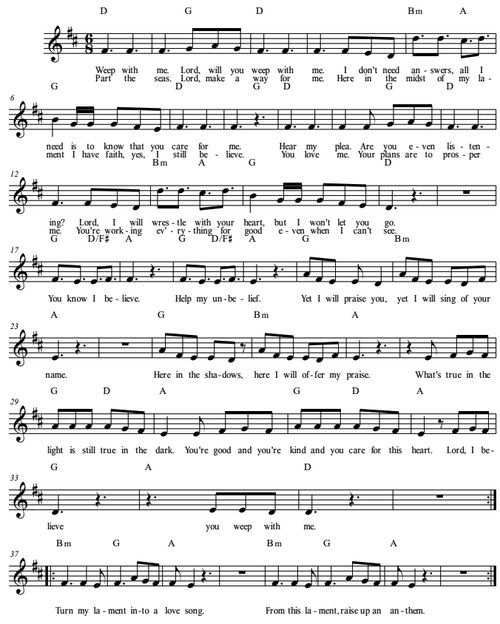
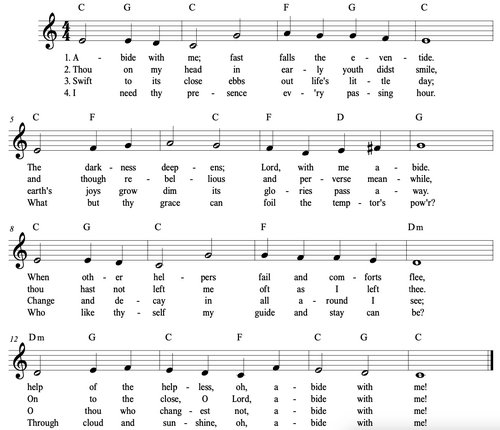
Close with this song.
No Comments