
What do you remember about classroom decorations from your grade school years?
Who's law is it anyway?
The Law was never meant to save people - at best, it can only to show you why you need saving. It might affect behavior, but it cannot forgive sin, which is the very core of the Christian message. When we make the Ten Commandments the center of the conversation (on a courthouse wall or in our own hearts) we've already lost the plot. Only grace can save.
Now that you've answered the Icebreaker, here's another question - this one, about rules.
What rules did you follow without understanding as a child?
Think back to being a kid, maybe seven, eight years old. What rules come to mind? Not ones that you resented, necessarily, just rules that felt arbitrary. Maybe it was a chore, a curfew, a 'because I said so.'
Here's what's interesting about that kind of experience: the rule usually made way more sense once you understood the relationship behind it. A curfew isn't really about the clock. It's about a parent who loves you and wants you home safe. Take away the relationship, and the rule is just... arbitrary. It's a demand with no story behind it.
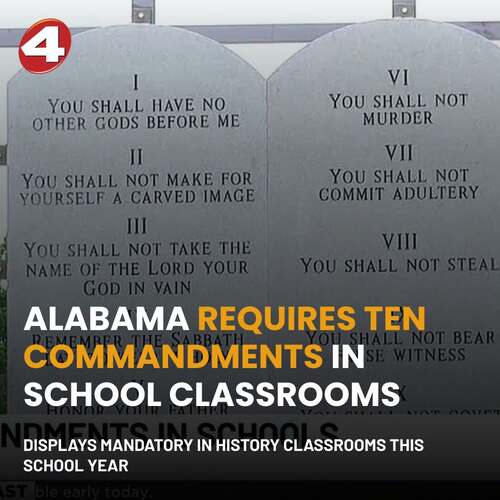
The 10 Commandments have been repeatedly brought up as something that might be put on classroom walls so that kids become familiar with them and know what they are when they hear about them. Several states have even passed laws requiring it. Lawsuits are flying.
Let's push past the political fight and ask a more basic question: What is the Law actually for, and how is it useful and when is it not? Both sides of the classroom wall fight (the people who want it posted and the people fighting to keep it off the wall) are missing something truly important, and grace-loving Christians are uniquely positioned to help.
Here's what's interesting about that kind of experience: the rule usually made way more sense once you understood the relationship behind it. A curfew isn't really about the clock. It's about a parent who loves you and wants you home safe. Take away the relationship, and the rule is just... arbitrary. It's a demand with no story behind it.
The 10 Commandments have been repeatedly brought up as something that might be put on classroom walls so that kids become familiar with them and know what they are when they hear about them. Several states have even passed laws requiring it. Lawsuits are flying.
Let's push past the political fight and ask a more basic question: What is the Law actually for, and how is it useful and when is it not? Both sides of the classroom wall fight (the people who want it posted and the people fighting to keep it off the wall) are missing something truly important, and grace-loving Christians are uniquely positioned to help.
Hopefully that makes enough sense to get you started. As you continue into the Worship portion of the Spotlight, pray this prayer together:
Lord,
What the law was powerless to do,
you have done for us,
sending Jesus to show that
unconditional love was always ours to receive.
Let our voices and methods
echo your good message.
Amen.
Lord,
What the law was powerless to do,
you have done for us,
sending Jesus to show that
unconditional love was always ours to receive.
Let our voices and methods
echo your good message.
Amen.
Design by Kent Reeder
Let's let the room feel the Law's weight before we think about it intellectually. Confession leans into real conviction, so we don't need to rush to comfort. Then we can let absolution land as the actual resolution, not a formality.
Leader: The Lord is holy, and His Law is holy.
All: But holiness was never our home address.
Leader: The Law tells us the truth about ourselves.
All: And the truth is, we cannot keep it.
Leader: But we are not here for the Law alone.
All: We are here because Christ is the end of the Law, and grace has the last word.
Consider having a different voice read each of the next passages.
Exodus 20:1–3 | "And God spoke all these words, saying, 'I am the Lord your God, who brought you out of the land of Egypt, out of the house of slavery. You shall have no other gods before me.'"
Romans 3:19–20 | "Now we know that whatever the law says it speaks to those who are under the law, so that every mouth may be stopped, and the whole world may be held accountable to God. For by works of the law no human being will be justified in his sight, since through the law comes knowledge of sin."
Romans 10:4 | "For Christ is the end of the law for righteousness to everyone who believes."
Confession | Leaning into the Law
Leader: Before we say a word of comfort tonight, we need to sit under the Law for a moment, in the way it was actually meant to be heard. So hear it plainly:
You shouldn't have other gods.
You shouldn't use God's name in imperfect ways.
If you're honest you know this isn't a set of rules you'd pass. None of us would. That's not an accident. That's the point. The Law was never given so we could pin it to a wall and call it handled. It was given to hold up a mirror. So let's just say the true thing to God, together.
Lord,
We have not loved you above all things.
We have made smaller gods of comfort, image, and control.
We have not loved our neighbor as ourselves.
We have wanted what isn't ours -
not just their things, but their ease, their approval, their life.
We cannot post our way to righteousness.
We cannot legislate our way to a clean heart.
We need more than a reminder. We need a rescue.
Have mercy on us. Amen.
Absolution
Here is the good news, and it is better than the Law could ever be: Christ is the end of the Law. Not because he ignored it, but because he kept it perfectly, in your place and then took its penalty on a cross that wasn't his to carry. If you are in Christ, the Law has nothing left to accuse you of, because the accusation already landed on him. In the name of Jesus Christ, you are forgiven. Not partially. Not on probation. Fully. This is your peace.
Leader: The Lord is holy, and His Law is holy.
All: But holiness was never our home address.
Leader: The Law tells us the truth about ourselves.
All: And the truth is, we cannot keep it.
Leader: But we are not here for the Law alone.
All: We are here because Christ is the end of the Law, and grace has the last word.
Consider having a different voice read each of the next passages.
Exodus 20:1–3 | "And God spoke all these words, saying, 'I am the Lord your God, who brought you out of the land of Egypt, out of the house of slavery. You shall have no other gods before me.'"
Romans 3:19–20 | "Now we know that whatever the law says it speaks to those who are under the law, so that every mouth may be stopped, and the whole world may be held accountable to God. For by works of the law no human being will be justified in his sight, since through the law comes knowledge of sin."
Romans 10:4 | "For Christ is the end of the law for righteousness to everyone who believes."
Confession | Leaning into the Law
Leader: Before we say a word of comfort tonight, we need to sit under the Law for a moment, in the way it was actually meant to be heard. So hear it plainly:
You shouldn't have other gods.
You shouldn't use God's name in imperfect ways.
If you're honest you know this isn't a set of rules you'd pass. None of us would. That's not an accident. That's the point. The Law was never given so we could pin it to a wall and call it handled. It was given to hold up a mirror. So let's just say the true thing to God, together.
Lord,
We have not loved you above all things.
We have made smaller gods of comfort, image, and control.
We have not loved our neighbor as ourselves.
We have wanted what isn't ours -
not just their things, but their ease, their approval, their life.
We cannot post our way to righteousness.
We cannot legislate our way to a clean heart.
We need more than a reminder. We need a rescue.
Have mercy on us. Amen.
Absolution
Here is the good news, and it is better than the Law could ever be: Christ is the end of the Law. Not because he ignored it, but because he kept it perfectly, in your place and then took its penalty on a cross that wasn't his to carry. If you are in Christ, the Law has nothing left to accuse you of, because the accusation already landed on him. In the name of Jesus Christ, you are forgiven. Not partially. Not on probation. Fully. This is your peace.
In one word, what's your gut reaction to this?
Exodus 20:1-17
And God spoke all these words:
2 “I am the Lord your God, who brought you out of Egypt, out of the land of slavery.
3 “You shall have no other gods before[a] me.
4 “You shall not make for yourself an image in the form of anything in heaven above or on the earth beneath or in the waters below. 5 You shall not bow down to them or worship them; for I, the Lord your God, am a jealous God, punishing the children for the sin of the parents to the third and fourth generation of those who hate me, 6 but showing love to a thousand generations of those who love me and keep my commandments.
7 “You shall not misuse the name of the Lord your God, for the Lord will not hold anyone guiltless who misuses his name.
8 “Remember the Sabbath day by keeping it holy. 9 Six days you shall labor and do all your work, 10 but the seventh day is a sabbath to the Lord your God. On it you shall not do any work, neither you, nor your son or daughter, nor your male or female servant, nor your animals, nor any foreigner residing in your towns. 11 For in six days the Lord made the heavens and the earth, the sea, and all that is in them, but he rested on the seventh day. Therefore the Lord blessed the Sabbath day and made it holy.
12 “Honor your father and your mother, so that you may live long in the land the Lord your God is giving you.
13 “You shall not murder.
14 “You shall not commit adultery.
15 “You shall not steal.
16 “You shall not give false testimony against your neighbor.
17 “You shall not covet your neighbor’s house. You shall not covet your neighbor’s wife, or his male or female servant, his ox or donkey, or anything that belongs to your neighbor.”
Discuss
Romans 3:19-31
19 Now we know that whatever the law says, it says to those who are under the law, so that every mouth may be silenced and the whole world held accountable to God. 20 Therefore no one will be declared righteous in God’s sight by the works of the law; rather, through the law we become conscious of our sin.
21 But now apart from the law the righteousness of God has been made known, to which the Law and the Prophets testify. 22 This righteousness is given through faith in Jesus Christ to all who believe. There is no difference between Jew and Gentile, 23 for all have sinned and fall short of the glory of God, 24 and all are justified freely by his grace through the redemption that came by Christ Jesus. 25 God presented Christ as a sacrifice of atonement, through the shedding of his blood—to be received by faith. He did this to demonstrate his righteousness, because in his forbearance he had left the sins committed beforehand unpunished— 26 he did it to demonstrate his righteousness at the present time, so as to be just and the one who justifies those who have faith in Jesus.
27 Where, then, is boasting? It is excluded. Because of what law? The law that requires works? No, because of the law that requires faith. 28 For we maintain that a person is justified by faith apart from the works of the law. 29 Or is God the God of Jews only? Is he not the God of Gentiles too? Yes, of Gentiles too, 30 since there is only one God, who will justify the circumcised by faith and the uncircumcised through that same faith. 31 Do we, then, nullify the law by this faith? Not at all! Rather, we uphold the law.
Romans 4:1-8
What then shall we say that Abraham, our forefather according to the flesh, discovered in this matter? 2 If, in fact, Abraham was justified by works, he had something to boast about—but not before God. 3 What does Scripture say? “Abraham believed God, and it was credited to him as righteousness.”
4 Now to the one who works, wages are not credited as a gift but as an obligation. 5 However, to the one who does not work but trusts God who justifies the ungodly, their faith is credited as righteousness. 6 David says the same thing when he speaks of the blessedness of the one to whom God credits righteousness apart from works:
7 “Blessed are those
whose transgressions are forgiven,
whose sins are covered.
8 Blessed is the one
whose sin the Lord will never count against them.”
Exodus 20:1-17
And God spoke all these words:
2 “I am the Lord your God, who brought you out of Egypt, out of the land of slavery.
3 “You shall have no other gods before[a] me.
4 “You shall not make for yourself an image in the form of anything in heaven above or on the earth beneath or in the waters below. 5 You shall not bow down to them or worship them; for I, the Lord your God, am a jealous God, punishing the children for the sin of the parents to the third and fourth generation of those who hate me, 6 but showing love to a thousand generations of those who love me and keep my commandments.
7 “You shall not misuse the name of the Lord your God, for the Lord will not hold anyone guiltless who misuses his name.
8 “Remember the Sabbath day by keeping it holy. 9 Six days you shall labor and do all your work, 10 but the seventh day is a sabbath to the Lord your God. On it you shall not do any work, neither you, nor your son or daughter, nor your male or female servant, nor your animals, nor any foreigner residing in your towns. 11 For in six days the Lord made the heavens and the earth, the sea, and all that is in them, but he rested on the seventh day. Therefore the Lord blessed the Sabbath day and made it holy.
12 “Honor your father and your mother, so that you may live long in the land the Lord your God is giving you.
13 “You shall not murder.
14 “You shall not commit adultery.
15 “You shall not steal.
16 “You shall not give false testimony against your neighbor.
17 “You shall not covet your neighbor’s house. You shall not covet your neighbor’s wife, or his male or female servant, his ox or donkey, or anything that belongs to your neighbor.”
Discuss
- What are the 10 Commandments?
- What reasons to people give for having them in schools or courtrooms?
Romans 3:19-31
19 Now we know that whatever the law says, it says to those who are under the law, so that every mouth may be silenced and the whole world held accountable to God. 20 Therefore no one will be declared righteous in God’s sight by the works of the law; rather, through the law we become conscious of our sin.
21 But now apart from the law the righteousness of God has been made known, to which the Law and the Prophets testify. 22 This righteousness is given through faith in Jesus Christ to all who believe. There is no difference between Jew and Gentile, 23 for all have sinned and fall short of the glory of God, 24 and all are justified freely by his grace through the redemption that came by Christ Jesus. 25 God presented Christ as a sacrifice of atonement, through the shedding of his blood—to be received by faith. He did this to demonstrate his righteousness, because in his forbearance he had left the sins committed beforehand unpunished— 26 he did it to demonstrate his righteousness at the present time, so as to be just and the one who justifies those who have faith in Jesus.
27 Where, then, is boasting? It is excluded. Because of what law? The law that requires works? No, because of the law that requires faith. 28 For we maintain that a person is justified by faith apart from the works of the law. 29 Or is God the God of Jews only? Is he not the God of Gentiles too? Yes, of Gentiles too, 30 since there is only one God, who will justify the circumcised by faith and the uncircumcised through that same faith. 31 Do we, then, nullify the law by this faith? Not at all! Rather, we uphold the law.
- What can't the law do?
- To what extent is the law the message of Christianity?
Romans 4:1-8
What then shall we say that Abraham, our forefather according to the flesh, discovered in this matter? 2 If, in fact, Abraham was justified by works, he had something to boast about—but not before God. 3 What does Scripture say? “Abraham believed God, and it was credited to him as righteousness.”
4 Now to the one who works, wages are not credited as a gift but as an obligation. 5 However, to the one who does not work but trusts God who justifies the ungodly, their faith is credited as righteousness. 6 David says the same thing when he speaks of the blessedness of the one to whom God credits righteousness apart from works:
7 “Blessed are those
whose transgressions are forgiven,
whose sins are covered.
8 Blessed is the one
whose sin the Lord will never count against them.”
Note to a School Staffer
Whatever any of us think about the legal fight, the people actually standing in those classrooms didn't choose to be conscripted into it. Right now, write a short, genuine thank-you or encouragement note to a teacher or school staff member you know. You don't need to include anything about the law, nothing political.
Just: I see you, and the work you do matters. Drop it off, mail it, or hand it over in person.
Just: I see you, and the work you do matters. Drop it off, mail it, or hand it over in person.
Since we've spend some time talking about how not to use the 10 Commandments, let's send off with an example of a good meditation on them, useful to the grace-oriented user.
Permission Branding by Kent Reeder
Pray Together
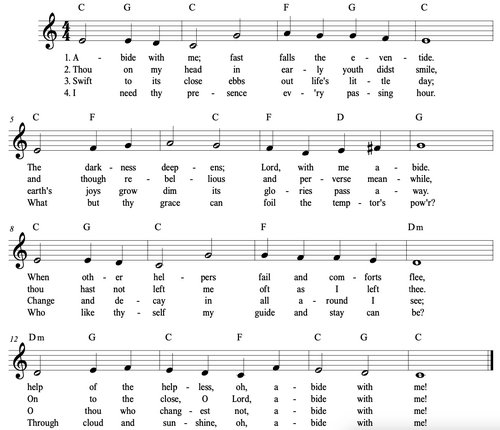
Close with this song.
Posted in Searchlight Edition
No Comments