
What is your relationship with showering - do you dread it, look forward to it, or something in between?
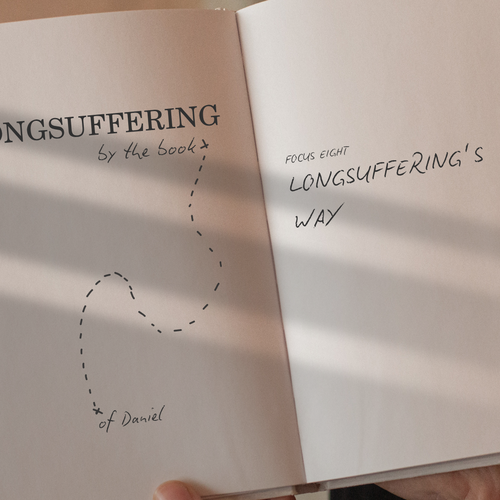
Longsuffering's Way
Longsuffering. As an adjective, it simply describes patiently enduring difficult things. Over the course of this series, though, it has hopefully gained nuance, describing a way of living in a context where, for any number of reasons, you don't quite "fit." (And as such, it hopefully has gained the value of being essentially a universal condition.)

Now that you've answered the Icebreaker, here's another question - this one, about obstacles.
What is getting in the way?
Not "what's your obstacle," in the abstract. I mean right now. Today. What's the actual thing, be it a job, a diagnosis, a relationship...a thing you've been waiting on so long you've stopped even expecting it to move?
Hold that. We're coming back to it.
There's a phrase that's gained popularity lately; you've probably seen it on a coffee mug or a book cover. "The obstacle is the way." It comes from Marcus Aurelius, a Roman emperor, writing in his private journal almost two thousand years ago. And it got turned into a bestselling book a few years back that a lot of people love.
Here's the pitch: don't resent whatever's blocking you, use it. Every obstacle is fuel. Flip it, convert it, turn the impediment into your advantage. And if you can do that, if you're disciplined enough, you stay in command. Nothing gets to knock you off course, because you've made everything, even the bad stuff, work for you.
It's a good line. I get why it's popular.
But sit with it for a second, and there's something underneath it. It's a philosophy of control. The obstacle is "the way" because you can bend it to your will. Every hard thing that happens to you is secretly just an opportunity for you to seize.
The book of Daniel ends in a very different way.
Daniel has just spent an entire chapter watching a vision he cannot make sense of. Wars, kings, timelines, numbers...and at the end of it, he asks the obvious question: what does this mean? How long until it's over?
And the answer he gets isn't an explanation. It's not "here's how you master this." It's the words: "Go your way."
That's it. Daniel doesn't get the obstacle resolved. He doesn't get to convert it into anything. The text says plainly that he didn't understand it, and then he's told to let it be, and keep walking.
So, here's the reframe:
The way is the way. The obstacles in front of you aren't, nor are they there for you to conquer. They're there to teach you something harder than "seize control." They're there to teach you that you were never in control to begin with and don't need to be to go forward.
Stoicism says: use the obstacle so you can stay the one in charge. Daniel says: the obstacle is exactly where you find out you were never the one in charge and you keep going anyway. Faithfully. Not because you fixed it, but because you were never the one who had to.
That's why this is the last part of this series. Every piece in Daniel (the exile, the furnace, the lions, the king who lost his mind, the vision nobody could decode) it's all been circling this same thing in different clothes. Longsuffering was never Daniel's strategy for getting control back. It was his willingness to stay faithful without it.
Hold that. We're coming back to it.
There's a phrase that's gained popularity lately; you've probably seen it on a coffee mug or a book cover. "The obstacle is the way." It comes from Marcus Aurelius, a Roman emperor, writing in his private journal almost two thousand years ago. And it got turned into a bestselling book a few years back that a lot of people love.
Here's the pitch: don't resent whatever's blocking you, use it. Every obstacle is fuel. Flip it, convert it, turn the impediment into your advantage. And if you can do that, if you're disciplined enough, you stay in command. Nothing gets to knock you off course, because you've made everything, even the bad stuff, work for you.
It's a good line. I get why it's popular.
But sit with it for a second, and there's something underneath it. It's a philosophy of control. The obstacle is "the way" because you can bend it to your will. Every hard thing that happens to you is secretly just an opportunity for you to seize.
The book of Daniel ends in a very different way.
Daniel has just spent an entire chapter watching a vision he cannot make sense of. Wars, kings, timelines, numbers...and at the end of it, he asks the obvious question: what does this mean? How long until it's over?
And the answer he gets isn't an explanation. It's not "here's how you master this." It's the words: "Go your way."
That's it. Daniel doesn't get the obstacle resolved. He doesn't get to convert it into anything. The text says plainly that he didn't understand it, and then he's told to let it be, and keep walking.
So, here's the reframe:
The way is the way. The obstacles in front of you aren't, nor are they there for you to conquer. They're there to teach you something harder than "seize control." They're there to teach you that you were never in control to begin with and don't need to be to go forward.
Stoicism says: use the obstacle so you can stay the one in charge. Daniel says: the obstacle is exactly where you find out you were never the one in charge and you keep going anyway. Faithfully. Not because you fixed it, but because you were never the one who had to.
That's why this is the last part of this series. Every piece in Daniel (the exile, the furnace, the lions, the king who lost his mind, the vision nobody could decode) it's all been circling this same thing in different clothes. Longsuffering was never Daniel's strategy for getting control back. It was his willingness to stay faithful without it.
Hopefully that makes enough sense to get you started. As you continue into the Worship portion of the Spotlight, pray this prayer together:
Lord,
You say you are the way,
the truth, and the life.
You suffered much,
and continue to promise that you
suffer with us, whatever we go through.
Thank you for being the way.
Amen.
Lord,
You say you are the way,
the truth, and the life.
You suffered much,
and continue to promise that you
suffer with us, whatever we go through.
Thank you for being the way.
Amen.
The Long-sufferer's Send-off
At the end of the book of Romans, Paul gives his audience a send-off wish that is powerful because it assumes they'll be long-suffering and need to keep functioning even so. As a group, say these words in rotation, line by line.
(First person) Love must be sincere.
(Second person) Hate what is evil; cling to what is good.
(Etc.) Be devoted to one another in love.
Honor one another above yourselves.
Never be lacking in zeal, but keep your spiritual fervor, serving the Lord.
Be joyful in hope, patient in affliction, faithful in prayer.
Share with the Lord’s people who are in need.
Practice hospitality.
Bless those who persecute you; bless and do not curse.
Rejoice with those who rejoice; mourn with those who mourn.
Live in harmony with one another.
Do not be proud, but be willing to associate with people of low position.
Do not be conceited.
Do not repay anyone evil for evil.
Be careful to do what is right in the eyes of everyone.
If it is possible, as far as it depends on you, live at peace with everyone.
Do not take revenge, my dear friends, but leave room for God’s wrath, for it is written: “It is mine to avenge; I will repay,” says the Lord.
On the contrary: “If your enemy is hungry, feed him;
if he is thirsty, give him something to drink.
In doing this, you will heap burning coals on his head.”
Do not be overcome by evil, but overcome evil with good.
At the end of the book of Romans, Paul gives his audience a send-off wish that is powerful because it assumes they'll be long-suffering and need to keep functioning even so. As a group, say these words in rotation, line by line.
(First person) Love must be sincere.
(Second person) Hate what is evil; cling to what is good.
(Etc.) Be devoted to one another in love.
Honor one another above yourselves.
Never be lacking in zeal, but keep your spiritual fervor, serving the Lord.
Be joyful in hope, patient in affliction, faithful in prayer.
Share with the Lord’s people who are in need.
Practice hospitality.
Bless those who persecute you; bless and do not curse.
Rejoice with those who rejoice; mourn with those who mourn.
Live in harmony with one another.
Do not be proud, but be willing to associate with people of low position.
Do not be conceited.
Do not repay anyone evil for evil.
Be careful to do what is right in the eyes of everyone.
If it is possible, as far as it depends on you, live at peace with everyone.
Do not take revenge, my dear friends, but leave room for God’s wrath, for it is written: “It is mine to avenge; I will repay,” says the Lord.
On the contrary: “If your enemy is hungry, feed him;
if he is thirsty, give him something to drink.
In doing this, you will heap burning coals on his head.”
Do not be overcome by evil, but overcome evil with good.
Keeping Refugees in Mind
Pray Together
Close the long-suffering series by moving it from study to practice each person names one real place they're waiting on God right now, is heard by a partner, and is prayed for by name before they leave.
Pair up. One trio is fine for an odd number. Have pairs spread out around the room for a bit of privacy, and before moving, review the two parts: sharing, then praying.
Part 1: Share
Where in your life right now do you most feel like Daniel: asked to keep trusting God when the answer, the rescue, or the relief hasn't come yet?
If people need help getting specific, offer these follow-ups:
Part 2: Pray for Each Other
Each person now prays out loud, by name, for the partner who just shared. Give them this three-part structure so no one freezes up:
Wrap-Up
Close with one challenge: each person texts their partner once this week, just to ask "how's the wait going?" No pressure to solve anything — just to keep noticing each other past tonight.
Pair up. One trio is fine for an odd number. Have pairs spread out around the room for a bit of privacy, and before moving, review the two parts: sharing, then praying.
Part 1: Share
Where in your life right now do you most feel like Daniel: asked to keep trusting God when the answer, the rescue, or the relief hasn't come yet?
If people need help getting specific, offer these follow-ups:
- What's the situation, and how long has it actually been going on?
- What's the hardest part of the waiting itself? (Not just the problem, but of being "in the middle of the problem.")
- What would it look like this week to find trust and patience in the middle of it, like Daniel did?
Part 2: Pray for Each Other
Each person now prays out loud, by name, for the partner who just shared. Give them this three-part structure so no one freezes up:
- Thank God for something specific you just heard pertaining to a way your partner is already being faithful in that hard place.
- Ask God for the specific things they need to keep going: patience, endurance, peace, clarity, provision, etc. Choose whatever fits what they shared.
- Pray a piece of Daniel back over them — pick one and have it displayed for reference:
- Daniel 3:17–18 | Humility to acknowledge that "the God we serve is able...but even if he does not..." we can be faithful.
- Daniel 6:10 | For steady, ordinary faithfulness even under threat.
- Daniel 9:23 | The answer was already moving before it visibly arrived.
- Daniel 10:18 | Strength that is not their own.
- Daniel 12:13 | The ability to keep going on their way.
Wrap-Up
Close with one challenge: each person texts their partner once this week, just to ask "how's the wait going?" No pressure to solve anything — just to keep noticing each other past tonight.
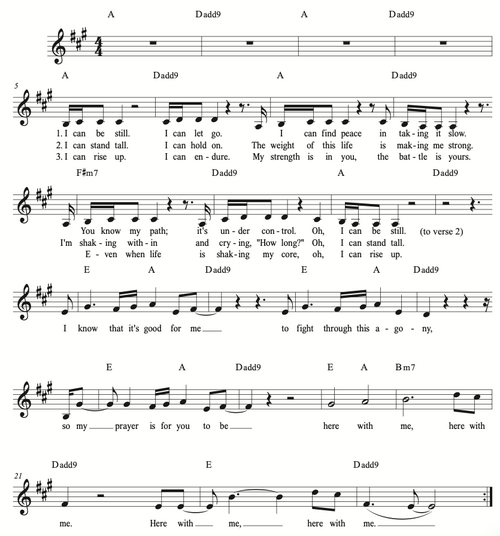
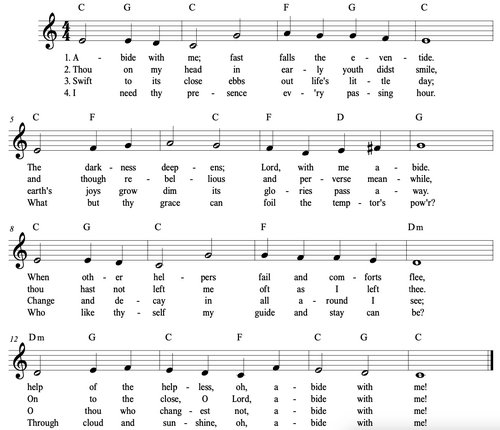
Close with this song.
No Comments